Introduction
Most conversations around oral health focus on brushing, flossing, and sugar intake. While these are essential, they are not the full picture.
Oral health is deeply connected to overall health—and in some cases, nutrition plays a more significant role than many people realize.
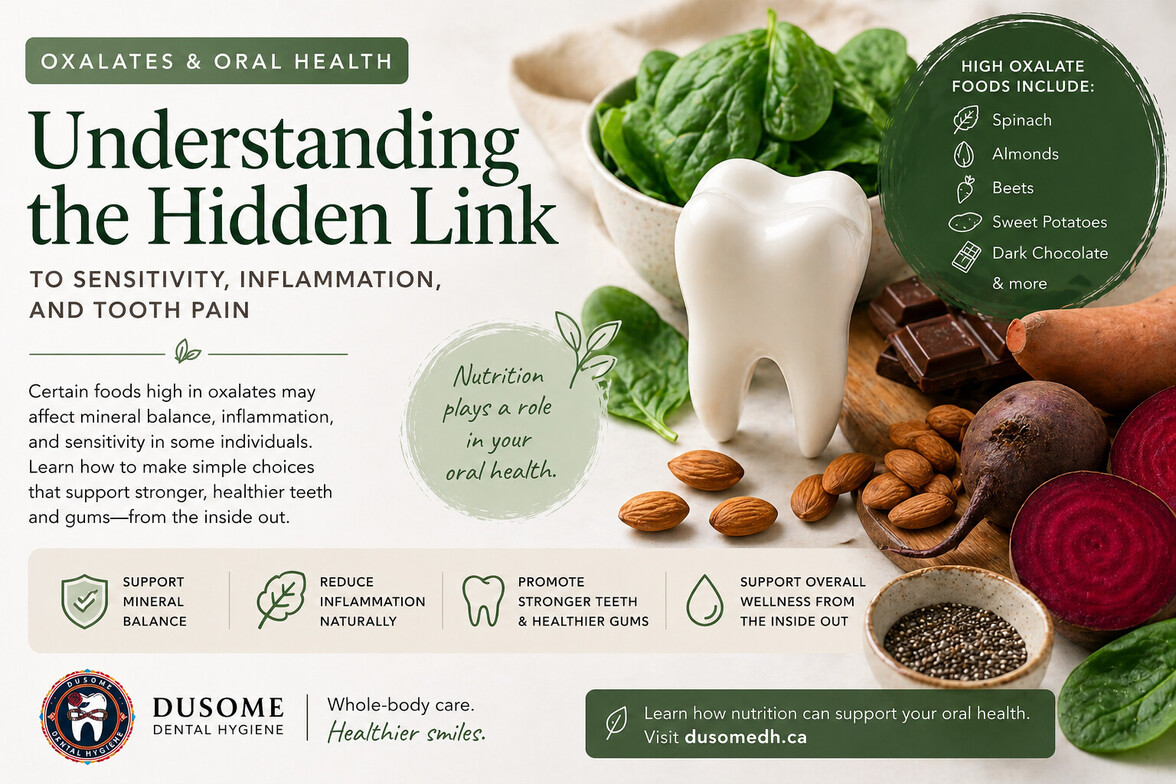
One emerging topic is oxalates—naturally occurring compounds found in many plant-based foods. While generally harmless in balanced amounts, oxalates may contribute to mineral imbalances, inflammation, and sensitivity in certain individuals.
⸻
What Are Oxalates?
Oxalates (oxalic acid) are compounds found in a wide variety of foods, especially plant-based sources.
In the body, oxalates bind to minerals—particularly calcium—and can form crystals.
For most people, oxalates are processed and eliminated without issue. However, when intake is high or the body struggles to manage them, they may contribute to systemic effects.
⸻
Do Oxalates Affect Teeth Directly?
Oxalates do not directly cause cavities or erode enamel like sugar and acidic beverages.
However, they may affect oral health indirectly, which is where clinical awareness becomes important.
⸻
How Oxalates May Influence Oral Health
1. Reduced Calcium Availability
Oxalates bind to calcium in the digestive tract, reducing absorption.
Calcium is essential for:
• Enamel strength
• Tooth remineralization
• Bone support
Over time, reduced calcium availability may contribute to weaker enamel and increased sensitivity.
⸻
2. Inflammation & Gum Health
In some individuals, higher oxalate intake may contribute to systemic inflammation.
This can affect:
• Gum tissue health
• Healing response
• Periodontal stability
⸻
3. Nerve Sensitivity & Tooth Pain
Some individuals report:
• Unexplained tooth pain
• Jaw discomfort
• Facial sensitivity
One theory suggests oxalate crystals may contribute to nerve irritation in sensitive individuals.
While still emerging, this pattern is being observed more frequently in clinical and nutritional discussions.
⸻
4. Saliva & Mineral Balance
Saliva plays a critical role in protecting teeth.
Mineral imbalances influenced by oxalates may affect:
• Saliva quality
• Buffering ability
• Natural remineralization
⸻
Common High-Oxalate Foods
High Oxalate Foods
• Spinach
• Almonds and almond flour
• Beets
• Sweet potatoes
• Dark chocolate
• Rhubarb
Moderate Oxalate Foods
• Berries
• Cashews
• Potatoes
• Black tea
Smart Nutritional Substitutions
Rather than eliminating foods, a balanced approach is best.
|
Instead of |
Try This |
|
Spinach |
Kale or arugula |
|
Almond milk |
Coconut or oat milk |
|
Almonds |
Pumpkin seeds |
|
Sweet potato |
Butternut squash |
|
Daily dark chocolate |
Occasional intake + pair with calcium |
Prevention & Balance Strategies
Pair Oxalates with Calcium
Helps bind oxalates in the gut and reduce absorption.
Stay Hydrated
Supports kidney function and saliva production.
Rotate Foods
Avoid consuming the same high-oxalate foods daily.
Support Gut Health
Healthy gut bacteria help break down oxalates.
Avoid “Healthy Overload”
Frequent intake of spinach smoothies or almond-based foods can unintentionally increase oxalate load.
Who Should Be More Mindful?
You may benefit from increased awareness if you:
- Have a history of kidney stones
- Experience digestive issues
- Have unexplained sensitivity or inflammation
- Follow a diet high in “clean” plant-based foods
Clinical Perspective
Oxalates are not a primary cause of dental disease.
However, in certain individuals, they may act as a contributing factor to:
- Mineral imbalance
- Inflammation
- Sensitivity patterns
A personalized approach is key.
Final Thoughts
Oral health is not just about what you do in the mirror—it’s about how you support your body internally.
For individuals experiencing ongoing sensitivity despite good oral hygiene, exploring nutritional factors like oxalates may provide additional insight.
Looking for a Personalized Approach?
Visit: dusomedh.ca
to learn more or book a consultation tailored to your needs.
Download Your Free Guide
Download your printable Oxalates & Oral Health guide below.
A simple, evidence-informed resource to help you understand food choices, reduce sensitivity, and support your oral health from the inside out.
Clinical References & Evidence Sources
This article is informed by current evidence-based research in nutrition, oral health, and systemic health.
- Health Canada. Dietary Reference Intakes Tables: Calcium and Vitamin D.
https://www.canada.ca - National Institutes of Health (NIH), Office of Dietary Supplements.
Calcium and Magnesium Fact Sheets for Health Professionals.
https://ods.od.nih.gov - Mayo Clinic. Nutrition and Oral Health Overview.
https://www.mayoclinic.org - Academy of Nutrition and Dietetics.
The Role of Nutrition in Maintaining Oral Health.
https://www.eatright.org - Holmes RP, Assimos DG.
The Impact of Dietary Oxalate on Kidney Stone Formation. Urological Research. - Weaver CM.
Calcium Bioavailability and Its Role in Health. - Linus Pauling Institute, Oregon State University.
Micronutrient Information Center.
https://lpi.oregonstate.edu
Professional Disclaimer
This content is provided for educational and informational purposes only and is not intended to substitute professional medical or dental advice, diagnosis, or treatment. Individual health needs vary. Always consult with a qualified healthcare professional before making changes to your diet, supplementation, or oral health care routine. Dusome Dental Hygiene provides guidance within the scope of dental hygiene practice.