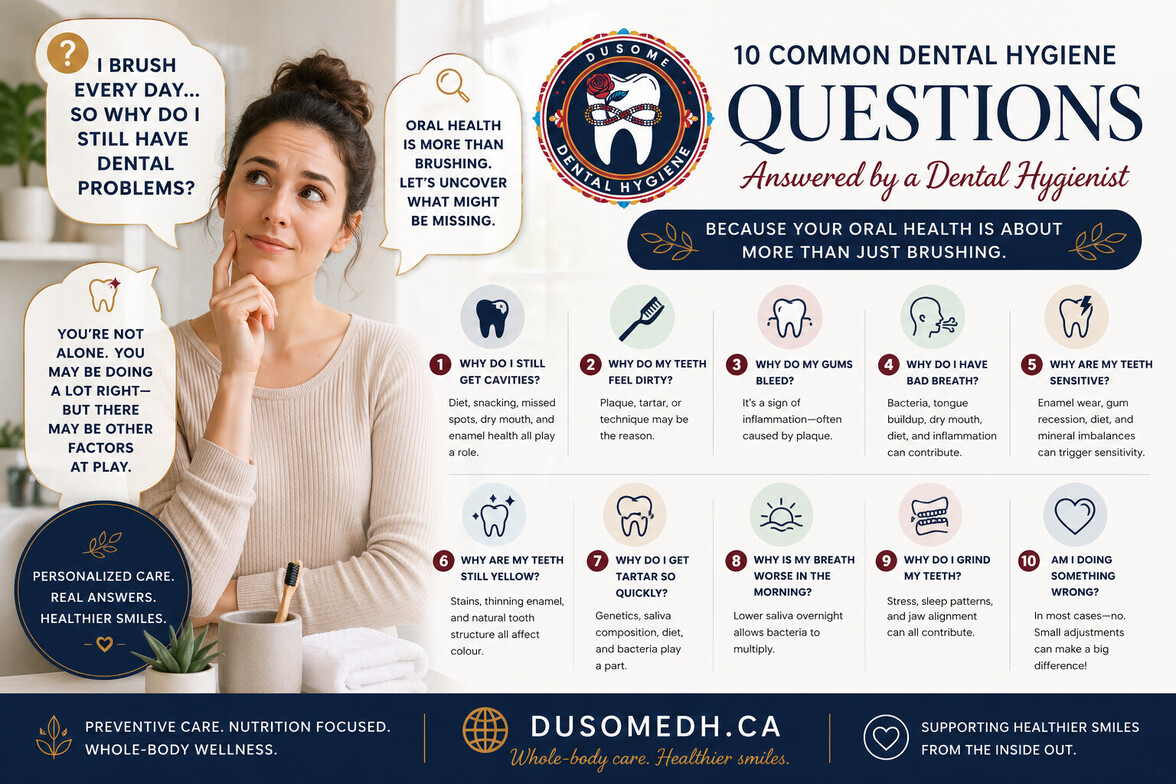
Introduction
If you’ve ever thought:
“I brush and floss… so why do I still have issues?”
—you’re not alone.
This is one of the most common (and frustrating) questions patients ask. The truth is, oral health is influenced by more than just brushing. Factors like technique, timing, diet, saliva, and even stress all play a role.
Let’s break down the most common concerns—and what may actually be happening beneath the surface.
1. “Why do I still get cavities if I brush every day?”
Brushing is essential—but it’s only one part of the equation.
Possible reasons:
- Snacking frequently (constant acid exposure)
- Sugary or acidic drinks (even “healthy” ones like smoothies)
- Missing areas while brushing (especially along the gumline)
- Dry mouth (reduced natural protection)
- Enamel weakened by diet or mineral imbalance
Key insight: Cavities are less about how often you brush and more about the overall environment in your mouth.
2. “Why do my teeth feel dirty even after brushing?”
That “fuzzy” feeling can come from:
- Plaque left behind in hard-to-reach areas
- Tartar (which cannot be removed at home)
- Ineffective brushing technique or timing
Electric toothbrushes and proper technique often make a noticeable difference.
3. “Why do my gums bleed when I brush or floss?”
Bleeding is not normal—it’s a sign of inflammation.
Common causes:
- Plaque buildup along the gumline
- Inconsistent flossing
- Early gum disease (gingivitis)
The good news: this is often reversible with proper care.
4. “Why do I have bad breath even though I brush?”
- Bad breath (halitosis) can come from:
- Bacteria on the tongue
- Dry mouth
- Gum inflammation
- Diet (high protein, coffee, etc.)
Brushing alone doesn’t address all sources—especially the tongue and saliva.
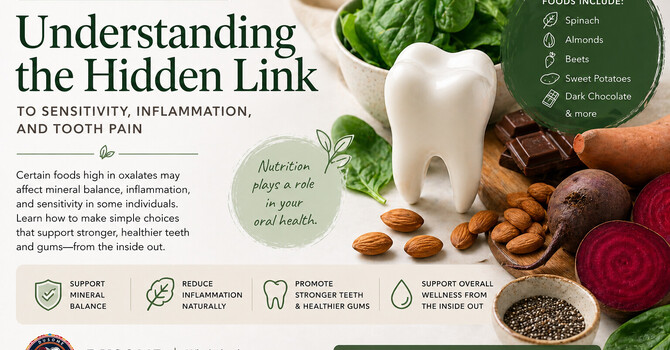
5. “Why are my teeth sensitive?”
Tooth sensitivity can be triggered by:
- Enamel wear
- Gum recession
- Diet (acidic foods/drinks)
- Temperature changes
- Mineral imbalances
This is where your internal health and nutrition may play a role.
6. “Why do my teeth look yellow even when they’re clean?”
Tooth colour is influenced by:
- Natural dentin (underlying tooth structure)
- Staining from foods and drinks
- Thinning enamel
Clean teeth are not always “white teeth”—and that’s completely normal.
7. “Why do I get tartar so quickly?”
Some people naturally build tartar faster due to:
- Saliva composition
- Genetics
- Diet
- Oral bacteria balance
Even with excellent home care, professional cleanings are still necessary.
8. “Why does my breath smell in the morning?”
Morning breath happens because:
- Saliva production drops overnight
- Bacteria multiply in a dry environment
Hydration and nighttime oral care help reduce this.
9. “Why do I grind or clench my teeth?”
Often linked to:
- Stress
- Sleep patterns
- Jaw alignment
Over time, this can lead to:
- Tooth wear
- Sensitivity
- Jaw discomfort
10. “Am I doing something wrong?”
In most cases—the answer is no.
You may be:
- Doing the right things, but missing small details
- Experiencing factors outside your control (saliva, genetics, diet)
- Following routines that need slight adjustments
Oral health is not one-size-fits-all.
What Actually Makes the Biggest Difference
Instead of focusing only on brushing, think bigger:
- Proper technique and consistency
- Diet and frequency of eating
- Hydration and saliva health
- Regular professional care
- Personalized recommendations
Final Thoughts
Oral health isn’t just about what you do in the mirror—it’s about how your body, habits, and environment all work together.
If you’re experiencing ongoing issues despite doing “everything right,” it may be time for a more personalized approach.
Looking for Clarity?
Visit dusomedh.ca
to learn more or book a consultation tailored to your needs.
Clinical References & Evidence Sources
This article is informed by current evidence-based research in oral health and preventive care.
- Health Canada. Oral Health and Preventive Care Resources.
https://www.canada.ca - National Institutes of Health (NIH), Office of Dietary Supplements.
Micronutrients and Oral Health Fact Sheets.
https://ods.od.nih.gov - Mayo Clinic. Oral Health: A Window to Your Overall Health.
https://www.mayoclinic.org - Academy of General Dentistry.
Oral Health Topics and Patient Education Resources. - American Dental Association (ADA).
Oral Hygiene, Plaque, and Tartar Information. - Journal of Clinical Periodontology.
Plaque-Induced Gingivitis and Periodontal Health Research. - Canadian Dental Hygienists Association (CDHA).
Preventive Oral Health Care Guidelines.
Professional Disclaimer
*This content is provided for educational and informational purposes only and is not intended to substitute professional medical or dental advice, diagnosis, or treatment. Individual health needs vary. Always consult with a qualified healthcare professional before making changes to your oral health care routine. Dusome Dental Hygiene provides guidance within the scope of dental hygiene practice.