Introduction
Dental visits can feel overwhelming for many people—but for individuals with autism or ADHD, they can be especially challenging.
Sensory sensitivities, difficulty with focus, anxiety, and unpredictability can all impact both home care routines and dental appointments.
The good news: with the right approach, dental care can become more comfortable, more predictable, and more successful.
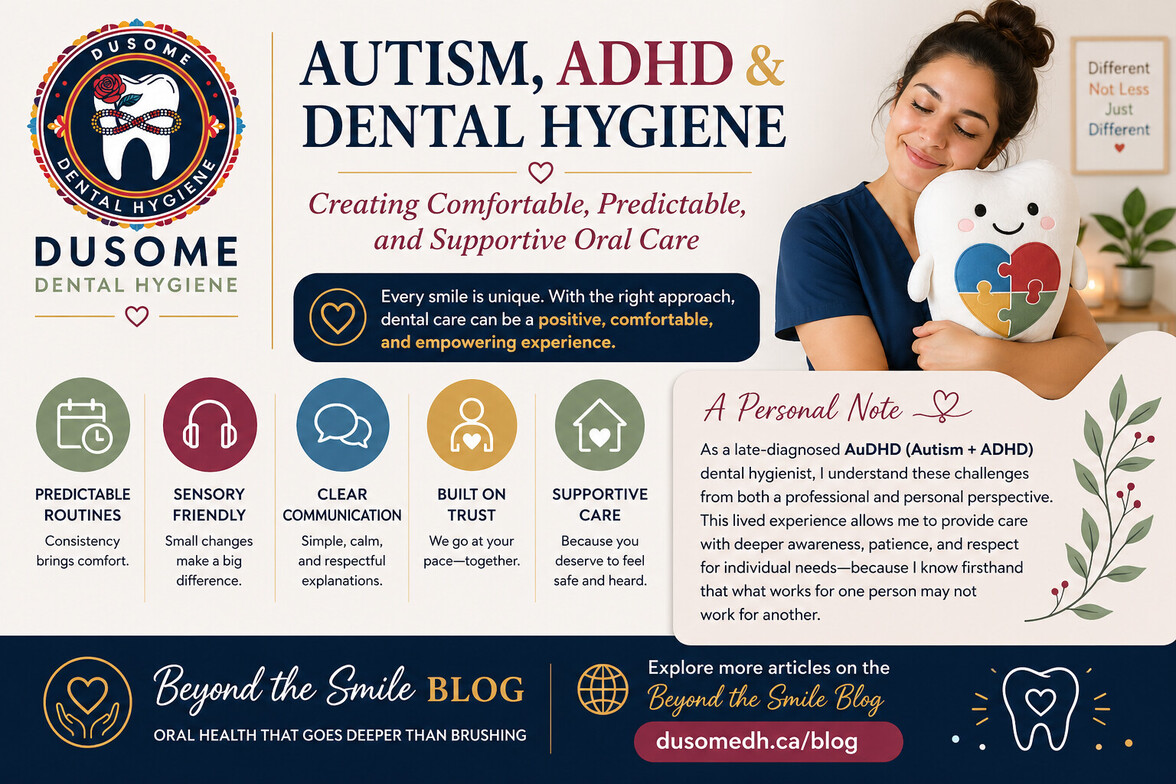
A Personal Note
As a late-diagnosed AuDHD (Autism + ADHD) dental hygienist, I understand these challenges from both a professional and personal perspective.
This lived experience allows me to approach care with deeper awareness, patience, and respect for individual needs—because I know firsthand that what works for one person may not work for another.
Understanding the Experience
Autism (Autism Spectrum Condition)
Individuals with autism may experience:
- Sensory sensitivities (sound, light, taste, touch)
- Need for routine and predictability
- Increased anxiety in unfamiliar environments
- Communication differences
ADHD (Attention-Deficit/Hyperactivity Disorder)
Individuals with ADHD may experience:
- Difficulty maintaining consistent routines
- Forgetfulness with daily habits
- Sensory seeking or avoidance behaviours
- Restlessness during longer appointments
These are not barriers—they simply require a different approach to care.
Common Challenges in Oral Health
- Difficulty tolerating brushing or flossing
- Aversion to certain textures (toothpaste, mouthwash)
- Trouble sitting still for appointments
- Heightened gag reflex
- Anxiety related to sounds, smells, or sensations
Strategies for At-Home Oral Care
Create Predictable Routines
- Same time every day
- Same steps, same order
- Use visual schedules if helpful
Use Sensory-Friendly Products
- Mild or flavour-free toothpaste
- Soft-bristled or silicone toothbrushes
- Electric toothbrushes (some prefer the consistent vibration)
Break It Down
Instead of one long routine:
- Brush → short break → continue
- Focus on progress, not perfection
Make It Visual
- Timers (2-minute sand timers or apps)
- Charts or reward systems
- Step-by-step visuals
Offer Choice
- Let the individual choose toothbrush colour or flavour
- Gives a sense of control and comforT
Creating a Better Dental Visit
Prepare in Advance
- Explain what will happen
- Use photos or simple descriptions
- Consider a “practice visit” if possible
Reduce Sensory Overload
- Sunglasses for bright lights
- Noise-reducing headphones
- Weighted blanket (if calming)
Use Clear, Simple Communication
- One instruction at a time
- Calm tone
- Avoid overwhelming explanations
Allow Extra Time
- Slower pace
- Breaks when needed
- Focus on comfort over speed
Build Trust Gradually
- First visit may just be getting comfortable
- Progress happens over time
For Adults with Autism or ADHD
Many adults were never given accommodations growing up.
If this is you:
- You are not “difficult”
- You simply need care that works for you
You can:
- Ask for shorter appointments
- Request clear step-by-step explanations
- Use headphones or comfort tools
- Communicate your preferences openly
The Role of the Dental Hygienist
Dental care should never feel like something you have to “push through.”
A supportive approach means:
- Listening without judgment
- Adapting care to the individual
- Creating a safe, respectful environment
Final Thoughts
There is no one “right” way to approach dental care.
For individuals with autism or ADHD, success comes from:
- Understanding
- Flexibility
- Personalization
With the right support, oral health care can become a positive and manageable experience.
Looking for a Supportive Approach?
Visit dusomedh.ca to learn more or book a consultation tailored to your needs.
Explore More
Explore more articles on the Beyond the Smile Blog
dusomedh.ca/blog
Clinical References & Evidence Sources
This article is informed by current evidence-based research in neurodiversity and oral health care.
- Canadian Dental Hygienists Association (CDHA).
Access to Oral Health Care for Individuals with Special Needs. - American Academy of Pediatric Dentistry (AAPD).
Guidelines for Management of Patients with Special Health Care Needs. - National Institute of Dental and Craniofacial Research (NIDCR).
Dental Care and Oral Health for Individuals with Developmental Conditions.
https://www.nidcr.nih.gov - Autism Speaks.
Dental Guide for Individuals with Autism. - Centers for Disease Control and Prevention (CDC).
ADHD and Developmental Disabilities Overview.
https://www.cdc.gov - Journal of Autism and Developmental Disorders.
Oral Health Challenges in Individuals with Autism Spectrum Disorder. - Journal of Dental Hygiene.
Patient-Centered Care Approaches in Special Needs Populations.
Professional Disclaimer
This content is provided for educational and informational purposes only and is not intended to substitute professional medical or dental advice, diagnosis, or treatment. Individual needs vary. Always consult with a qualified healthcare professional before making changes to your oral health care routine. Dusome Dental Hygiene provides guidance within the scope of dental hygiene practice.